Wednesday, 5 January 2022

Unique book – ASSOCIATION FOOTBALL, John Goodall, 1898


Unique book – ASSOCIATION FOOTBALL, John Goodall, 1898

William Blackwood and Sons was a Scottish publishing house and printer found by William Blackwood in 1804. It published many important authors including John Buchan, George Eliot, Margaret Oliphant and Joseph Conrad. The company commissioned John Goodall, with the assistance of S. Archibald De Bear, to write an instructional book in 1898 for aspiring footballers in which the rules of the game are listed along with how to develop the skills needed to successfully play in various positions as part of a team.

ASSOCIATION FOOTBALL by John Goodall, then of Derby County, cost 1 shilling/5p today. It is a unique publication.  It was dedicated to G.O. Smith who the author describes as ‘The Best Centre-Forward in my time.’

Goodall begins by stressing that whilst much can be gained ‘from observation and advice, patience, practice, and enthusiasm must do more… one cannot hope to become a good player without very hard work.’

Once the technicalities of the game are mastered, players should be guided by instinct, ‘which in this case means quickness of thought.’ Players must know each other’s play, as was the case at Preston where he played between 1885 and 1889.

Goodall had experienced the game when there were virtually no laws. In the years since then dribbling had been replaced by scientific football in which passing or combination play was king. Goodall noted that ‘in earlier days very little was known about training.’ He also offered advice about diet on match-days stating that ‘footballers should have a good square meal about three hours before the start of the match.’

Goodall, who during his career played in most positions, including goalkeeper, also uses the examples of great players in their respective roles to explain to readers who are keen to improve their own game what skills they need to work on.

Of those playing in the half back line up he states that ‘they have the most difficult position on the field. They have to join in both attack and in defence….’ According to Goodall, Ernest Needham was the best half back.

Whilst Goodall contends that football can be played by men of all sizes he believed that ‘a good big man is always preferable to a good little one.’ Up front he believed that ‘the collective style is preferable’ being superior to the employment of two wide men with three men inside waiting for centres or two pairs playing together with the centre forward waiting for the ball. In this ‘Sunderland in their prime came very near perfections. Their passing was admirable, and the players were well balanced.’

Goodall advises players to respect the referee, keep their temper under control and to not heed any advice from spectators. In his experience ‘it is matches away from home that the best mental qualities of the footballer are brought to play. He has few friends among the spectators….the footballer must be indifferent alike to jeers and cheers.’

The art of passing, states Goodall ‘lies in the placing or rolling of the ball so that the player who is to have control of it shall lose no time in proceeding. In fact, there should be a continuity in the progress of the ball, even though several players are touching it.’ It was ‘the Scotch.. who originated short passing and collective attack, and showed how successful the game could be made.’

Goodall believed that ‘a good footballer ought to shine more or less in any position.’ Compared to books today aimed at young aspiring footballers seeking to improve their skills then Goodall’s book is very basic – as by way of example he proposes keeping the players away from the ball during training as this will make them more hungry for it during matches at the weekend - but it is a sign of how the ageing footballer was regarded at the time that he was chosen to write it.

Sadly, Goodall was never asked to write a book about his own football story. Some footballers from his era were interviewed by their local newspapers after their careers had ended. The articles were generally published in a series, some in the Saturday Football Specials, over a number of weeks. They included the remembrances of Archie Hunter, the famous Aston Villa captain who led his side to FA Cup glory in 1887, which were published in the Birmingham Weekly Mercury in 1890.  

Mark Metcalf is writing a biography of John Goodall.


Tuesday, 4 January 2022

Standing at Premier League matches - Fulham 2001-02 and Sunderland 1996/7

 Despite what Match-of-the-Day said the Chelsea v Liverpool on 2 January 2022 was not the first time there was official standing at Premier League match. 

In August 2001 I stood on the paddock terraces at Craven Cottage as newly promoted Fulham beat Sunderland 2-0.  

In 1996/7, Sunderland played at Roker Park in the Premier League and the ground capacity of around 21,000 was largely made up of terracing including both the Fulwell and Roker Ends. 

Monday, 3 January 2022

Clarks shoes staff strike a success Fire and hire practices enabled by government


Clarks shoes staff strike a success

Fire and hire practices enabled by government

Big Issue North magazine Christmas Issue 5

A ten-week all-out strike by 100 long-serving warehouse workers has forced their employer to abandon plans to use controversial “fire and rehire” practices to significantly reduce their pay and conditions.

Clarks employees in the village of Street, Somerset, reached an agreement with the footwear company following mediation but other groups of workers have been less fortunate when faced with similar situations. Just recently the government blocked attempts to outlaw some aspects of fire and rehire in Parliament.

 Once termed “dismissal and re-engagement”, fire and rehire is when an employer, that would generally seek to negotiate an agreement with trade unions or workers’ representatives dismisses employees but immediately re-offers them their old roles on much less favourable terms.

Cuts to pay and benefits

Clarks has been hit badly during the pandemic. The company suffered a 44 per cent sales drop and a £172 million loss last year. The Clark family, owners of the business for nearly 200 years, sold a majority stake in March to the Hong Kong private equity group Lion Rock Capital, which has cut hundreds of jobs and imposed poorer terms and conditions for new employees including at its distribution centre in Street.

Among planned reductions for established warehouse staff at Street was a 15 per cent drop in basic pay from £11.16 an hour to £9.50. Overtime rates, sick pay benefits accrued over many years, paid lunch and tea breaks, and redundancy terms were also set to be cut dramatically. A Clarks spokesperson said: “It is crucial that Clarks achieves sustainable employment cost.”

According to Trevor Stephens, a Clarks employee for 17 years and an elected Community union representative, the decision to move towards taking strike action was “the result of being told to sign a new contract or be fired. Everyone was given four weeks to sign and if not then an eight-week notice period was to be imposed before workers were to be shown the door.”

When Community then failed to get Clarks to agree to mediation with dispute resolution body Acas, there was a union members’ ballot and strike action began on 4 October. “

We had no option as they were taking so much away from us,” Stephens said. “In my case I was unsure if I would have been able to afford to rent my property. If not then I would have had no place for my children to stay with me when they visit. Other strikers also faced being unable to afford their mortgages and losing their family homes.”

Resolution reached

 Strikers mounted a daily picket line that was crossed by temporary workers desperate for permanent work. Stephens, the picket organiser, worked hard to ensure abuse was kept to a minimum and strikers rejected claims by the company that there were threats of violence towards strike breakers.

The Clarks strike, the first all-out strike in Somerset since a print workers dispute in 1986, was boosted by the largest trade union march this century in the county on 13 November in Street. Delegations came from across England and Wales.

Just before the event, Clarks gave strikers only a few hours to consider a new pay offer of £10.03 an hour, which was rejected.

Now, following Acas brokered negotiations, Clarks has adopted a change of approach and will maintain the £11.16 hourly rates. New contract staff have also had their pay rates increased by 5.4 per cent. The company has also accepted that it will be the norm in the future for it to engage in collective bargaining with the union on all terms and conditions.

In a joint statement, Community and Clarks said: “We are pleased that a resolution has been reached that works in everybody’s interests, protects Community members’ livelihoods, and recognises their loyalty to Clarks”.

Normal working has resumed.

 The outcome at Clarks will be a boost to engineering members of the union Unite striking at Weetabix factories in Kettering and Corby. The union contends that the cereal producer’s cuts to pay terms and conditions are an example of fire and rehire. The company disputes this. Some 80 engineers originally took two days’ action each week but are now engaged in four-day walkouts.

Other attempts at strike action over fire and rehire have produced mixed results. The 44 days of strikes undertaken by 7,000 British Gas employees were unable to prevent job losses and severe cuts in pay and conditions. At Go North West in Manchester, bus workers in Unite took 85 days of action and forced the company to withdraw its fire and rehire tactic but did experience cuts to some terms and conditions.

Earlier this year transport union RMT carriage cleaner members at Stadler Rail UK on Merseyrail unanimously rejected the company’s plans to cut pay by 13 per cent, make large reductions in shift allowances and cut annual leave.

According to RMT regional officer John Tilley: “The company then went over the union’s heads and started individual consultations, and the contract that they sent to staff was worse than the one they had just rejected.”

The RMT wrote, without success, to metro mayor Steve Rotheram, who has partial control of Merseyrail, urging him to take its cleaners back in house to ensure their working conditions were protected. Staff were balloted for strike action.

Some 52 RMT members voted for action, with 21 against. However, under the Trade Union Act 2016, at least 50 per cent of all eligible members must vote and the Stadler ballot was three votes short. The RMT advised its members to sign the new contracts.

“It’s the latest Tory antitrade union laws that are proving to be a real obstacle in so many disputes now,” said Tilley. “We are not ‘building back better’ from Covid-19. The reality for many low paid, vulnerable workers is that we are going backwards. In the case of these Stadler train cleaners that means going back to 1981.”

 “Unacceptable”

The government does not collect statistics on fire and rehire but according to a poll of 2,000 employers by the Chartered Institute of Personnel and Development more than 22 per cent have made changes to their employees’ contracts during the coronavirus crisis. Of those, one in seven companies – 3 per cent of all employers – have used fire and rehire tactics.

Those who back the process claim companies with genuine and pressing business needs that cannot reach agreements with employees must be able to act quickly. But the TUC, which represents the majority of unions in England and Wales, has calculated that 70 per cent of companies that have used fire and rehire are enjoying profits.

 The use of fire and rehire has been called “unacceptable” by Boris Johnson and the leader of the Commons, Jacob Rees-Mogg, has said companies should know “better than to behave in this way”.

Prior to the 2019 general election the government promised it would bring forward a new employment bill to improve people’s workplace rights but there is currently no sign of the legislation.

On 22 October, the government also used parliamentary procedures to “talk out” Labour MP Barry Gardiner’s private member’s bill on fire and rehire. Had it been passed, the bill would not have prohibited the practice, but would have forced all except those companies facing collapse to fully consult with employees first, encouraging “both employers and workers to reach the best outcome and discourage bad employers from threatening fire and rehire, where there is not a legitimate threat to the business that demands it,” the MP for Brent North said.

Business minister Paul Scully, speaking for 40 minutes for the government, criticised fire and rehire but said: “I do not believe that this bill as it stands – even if it’s amended, as I do not believe we need that primary legislation to achieve its ends – will actually have the effect… What we need to do is make sure that we can address these situations. We’ll legislate if we need to, but we’ll do it as a last resort.”

The government has asked Acas to produce more detailed guidance on when fire and rehire can be used.

Recently Unite general secretary Sharon Graham criticised the government, saying: “They have colluded to stand on the side of bullying bosses and against the interests of workers.”

MARK METCALF

SEARCH FOR HALIFAX MAN GOES ON Martin Rhodes went missing while climbing


SEARCH FOR HALIFAX MAN GOES ON

Martin Rhodes went missing while climbing

25-31 October 2021 in the Big Issue North magazine

Search team vows to keep looking for him

Friends and family of an experienced walker who went missing in the Scottish Highlands over two years ago have praised the continuing efforts of the local mountain rescue team to find his body.

Early on a bright morning in May 2019, Martin Rhodes, 46, from Halifax, was seen walking near Kinlochewe. When he did not return to his hotel after a sudden change in the weather brought heavy snow, he was reported missing that evening.

Far-reaching search


Extensive searches over the following week by specialist police officers, mountain rescue volunteers, RAF teams, the Search Rescue Dogs Association and an HM Coastguard helicopter found no trace of Rhodes. Appeals to residents to check sheds or anywhere a person might have sought shelter also proved unproductive.

Before travelling north, Rhodes, who had delayed his journey until he was confident of better weather, had told his close friend Steve Brown that he had hoped to climb five Munros in a day, including the “Fisherfield three” of Mullach Coire Mhic Fhearachair, Sgurr Ban and Beinn Tarsuuin.

“Martin’s house was full of walking boots, magazines and maps. He talked continuously about the trip. He had already climbed 80 Munros,” said Brown, a musician. “He was really looking forward to the challenge. He texted me to tell me of his safe arrival later that day.”

The Munros are 282 Scottish mountains over 3,000 feet named after Sir Hugh T Munro, who surveyed them in 1891. The highest is Ben Nevis. Rhodes’s aim was to join over 6,000 people who have climbed them all.

 In mid-May 2019, 30 of Rhodes’s friends, including Halifax MP Holly Lynch, held a vigil at his home. A social event, at which Brown performed, was organised by Halifax Labour Party, of which Rhodes was a member, to raise funds for the Dundonell Mountain Rescue Team (DMRT). Around £500 was collected.

From the start, Police Scotland asked DMRT to search for Rhodes. The team attends around 40 rescues a year and thankfully, according to team leader Donald Macrae, “in many cases missing people are found. In Martin’s case, this is different.”

When Rhodes did not return to his accommodation, Macrae asked four mountain rescue teams – around 60 people plus four search dogs and two helicopters – to look for Rhodes. The search area in the remote north-west Highlands was massive, equivalent to 2,500 football pitches in an area of wild mountainous country with no houses or roads. The mountains they climbed exceeded 1,000 metres and snow still fell on the high tops.


Part of the search area 


Dedicated team

Searches took place every day for a week before the DRMT moved to weekend searching for a few months. When winter arrived, the searches had to end but in 2020 the rescuers again looked for Rhodes. There was still no luck. Last month, 12 volunteers were back out. They had to camp as it is a day’s walking to get to the locations where Rhodes’s body might be found.

According to Macrae the searches will continue. “People and families matter to us,” he said. “They are always on our minds and so for the foreseeable future we will devote time each year to search.”

DMRT, which has about 50 members, is a charity run by volunteers who are expected to be available 24 hours a day, 365 days a year. Employers allow staff to leave work to attend rescues.

 Macrae himself is a deputy headteacher. Other members include engineers and self-employed joiners. Team members can often miss important birthdays or events. “Rescues can take up many hours of a person’s life,” said Macrae. “We also attend training sessions once or twice a month. We have a strong team ethic and through training together we know how each of us works, so we take care of each other. Keeping safe is vital to our success.”

Dundonell Mountain Rescue Team 


Fundraising effort

Brown and Rhodes’s mother, Kathleen, are full of praise for the DMRT and other organisations that have tried to find him. “Police Scotland and the Halifax police relayed important information when Martin was lost and both were very sympathetic and understanding,” said Brown. “DMRT are marvellous for still trying to find Martin. They are heroic volunteers who risk their lives to try and save others.”

“I miss Martin a lot and often wonder what happened,” said Kathleen. “He still had a lot of life in him, including walking on the Scottish mountains, which he loved. After being unemployed he had found work and his life was much better. It is very sad what has happened.

“If the DMRT, who, along with all the other organisations involved I would like to pay tribute to, can find Martin it would bring an end to some of the sorrow for myself, other family members and his many friends.”

At the vigil Brown sang Tom Paxton’s Rambling Boy. “I’ve never forgotten him. Keep rambling, Martin,” said a tearful Brown. The DRMT relies heavily on donations for its £40,000 annual costs. Police Scotland makes an annual grant payment of £13,000 but the rest must be fundraised. It is currently fundraising for a new team base.


The fee for this article was donated by myself to the DMRT. If you’d like to make a donation go to www.dmrt.org.uk

Just Giving: Dundonnell Mountain Rescue Team - JustGiving

Also on Facebook and Twitter, just search Dundonnell Mountain Rescue Team

Do waste incinerators kill infants? Podcast by Michael Ryan


Do waste incinerators kill infants?

Podcast by Michael Ryan


https://markwritecouk.files.wordpress.com/2022/01/waste-incinerators.mp3

Michael Ryan of Shrewsbury began examining the health record of incinerators after he considered that the loss of two of his children could have been the result of having lived downwind of an incinerator.

https://markwrite.co.uk/do-waste-incinerators-kill-infants/

 In this podcast he puts the case that after incinerators start operating that  infant death rates rise in locations exposed to emissions. He feels well-placed to do so due to personal circumstances and extensive research over the last two decades.

I have worked since 2009 with Michael on a series of Big Issue North articles and which can be read

https://markwrite.co.uk/incinerator-study/

Wednesday, 8 December 2021

Achtung Millwall podcast on Fred Spiksley

 It is 56 minutes long and went out on Tuesday 7 December 2021.

https://play.acast.com/s/achtung-radio/the-football-history-podcast-4-fred-spiksley?s=09


It followed an earlier podcast by myself on Charlie Hurley by Achtung Millwall. 


Wednesday, 1 December 2021

Riding project helps teach vital life skills


Riding project helps teach vital life skills

Horses expensively trained to remain calm

Big Issue North article 


A Bradford horse riding programme for disengaged school children has drawn praise from participants and their parents.

Changing Lives Through Horses (CL) is a national project organised by the British Horse Society (BHS) that takes place with qualified coaches at approved riding centres including the Throstle Nest Riding school at Wilsden Equestrian Centre.


 Opportunities extended

The BHS project is aimed at young people who are “permanently excluded, at risk of permanent exclusion or who have special education needs or disabilities”, those who are not in employment, education, or training, or lack the skills to improve their economic situation.


Throstle Nest is run by Jeanette Wilder, who has been working with horses since she was 12 when, along with her brother, she used ponies from the family dairy farm to teach riding skills to children from the Eccleshill area in Bradford. Wilder’s passion for horses has been extended into providing opportunities for young people who are otherwise very unlikely to learn to ride the animals.

“We put something back into the community. The Riding for the Disabled Association (RDA) is linked to us. When the BHS established Changing Lives four years ago, I immediately got us involved. Whilst it brings in some income, we lose out by needing to turn away other customers,” said Wilder

A general lesson at Wilsden costs £20 for 30 minutes and £25 for 45 minutes. On the Changing Lives programme the fees are £28 an hour and £45 for two. The costs are covered by schools, the RDA, parents and charitable associations.

 Prodding and poking

Amelia Helm, aged 14, has been riding for ten years. She persuaded her school to let her begin attending CL sessions in September.

“I am struggling speaking in school lessons,” she said. “Coming here is relaxing. It is fun and I have no worries as I don’t need to make an effort for people. “I do the lessons with other age groups and I relate to them as we are all passionate about horses.”

She also attends weekend pony club lessons and enjoys mucking out the stables and looking after the horses. She wants to do work experience at the riding school next year as she is looking to work with horses when she leaves education.

In addition to support from volunteers, Throstle Nest employs eight full-time staff, all women

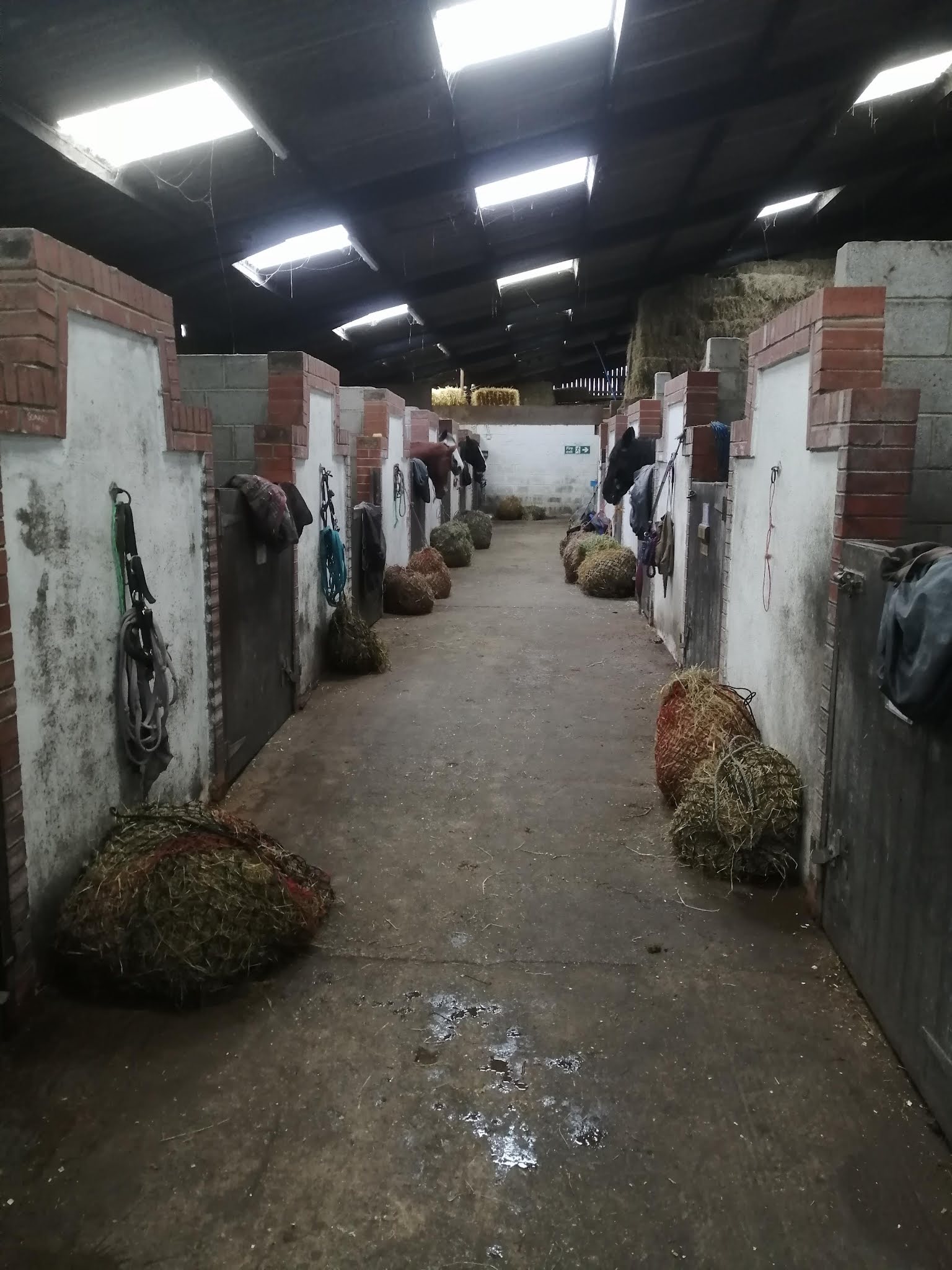
 On site it has 21 horses, more expensive to buy in recent years. Horses must be four years old and fullytrained before they can be used in the riding school and the animals, which need to be calm and forgiving enough to be able to overcome some prodding and poking, must be five before they can be employed on RDA sessions. To save costs, Wilder bought a three-year-old horse, which staff are training. There is no guarantee the horse will prove suitable for lessons.

There were nine children of varying abilities aged seven to 15 years on a Tuesday CL session in November. “We don’t tend to look at their diagnosis but just work with them on a weekly basis as the children can be totally different on each occasion,” said Wilder. “Sometimes they can be having a bad day because of a change of medication. We have a plan but you can realise it won’t work. You must be patient but we have a much lower ratio of staff compared to pupils than at school and so we can make swift changes.”

Special relationship

Warren Keighley, aged six, who has complex needs, has been attending the CL programme for two years.

“A physiotherapist identified that working with horses would be very beneficial for building his core strength,” said his mum Hannah. “The facilities here and the whole environment and dedication of staff, who are empathetic with children that have different needs, means you feel included.”

Grandad Martin is also a big fan. “Warren has moved from being afraid to get on a horse to saddling it up, mounting, leading and dismounting from the animal,” he said.

During lockdown the centre trained parents and grandparents in how to lead horses and this helped facilitate lessons for Warren.

 Before lockdown, Warren had built a special relationship with staff member Evie. On the day Big Issue North visited, the pair had met for the first time in over a year.

A smiling Warren said: “What I liked about today is when I saw Evie and I cried as I was happy. Missy was my horse today. She is a bit cheeky like another horse called Dolly. I like coming here and being in charge of a horse.”


According to Wilder the racing industry is offering opportunities to young people to undertake apprenticeships in stable yards and the pay thereafter is good.

Wilder explained that children attending the CL project are taught to work with others and to pay attention and concentrate as otherwise they get into trouble with the horse.

“It also improves their balance and by being fun it helps develop an interest that we can channel into education generally,” she said. “If they switch off at school in English and mathematics then we can get them to write about horses and work out how much to feed the animals.”

In more basic scenarios, children get to recognise different colours when they pick up objects when riding a horse.

The CL programme uses a range of awards that “are structured around promoting the holistic development of all involved and nurturing six life skills for all young people: building relationships, communication, confidence, responsibility, teamwork and perseverance”.

Susan*, who has seen her two sons benefit from engaging with horses said: “My eldest, who is hypermobile and has been diagnosed with attention deficit hyperactivity disorder, has improved his core strength by coming here.

“He has completed the award scheme development and accreditation network qualification, which took him a year. He is not going to achieve a standard qualification, so having a certificate where he can say ‘Look, I can do this’ is great for self-confidence.”

 Susan’s youngest son is nine. His CL programme is funded by his school and the RDA.

She said: “It has created a connection with horses, which has helped him emotionally and his attention span has expanded. When riding he must consider the needs of the horse and this moves him away from thinking about himself and helps him to get on with other children.”

Susan believes that many more disengaged children would have their lives improved if there were more opportunities to attend the project.


MARK METCALF * Name changed