Saturday, 19 February 2011

Women during the miners' strike

See below for a piece in which some research i did more than a quarter of a century ago features heavily and which may be of interest to one or two people:- 

http://www.northern-soft.de/miners/index.htm

Not one of the women you'd admire

Thursday, 17 February 2011

Paul Mason interview

Paul Mason’s probing of big business, economists and politicians who appear on Newsnight turns the driest subject into compelling viewing. With an agenda he sums up as “profit, people and planet”, Leigh-born Mason clearly revels in his role as Newsnight’s economics editor.

Equally at home discussing credit default swaps with bankers and dubstep with protesting students, Mason’s scope is wide. And he also comes at his subject from a different perspective than many economics correspondents. “I am no anti-capitalist but I’ve never bought the mainstream economics explanation that markets are always efficient and that complexity brings safety,” he says.

The financial crash surely bears him out. He started writing his gripping account of it, Meltdown, on the night Lehman Brothers went bust in September 2008 and it was published only five months later. Despite the banks’ role in the crash, how come they’ve been able to return to business as usual, including pay and bonuses?

“The bankers have created a system in which the politicians are an extension of an elite based in the banking sector,” he replies. “It’s a world in which there is a shared value system and the biggest shock they had in the last two or three years is that their value system suddenly came tumbling down.”

Nevertheless he does expect to see action. “Even the Bank of England is thinking about how to downsize the major banks. It may be more than just ensuring they have larger deposits when they lend, and it might even involve the legal break-up of banks in which the investment sector is split from the retail side.” 

He believes that Vince Cable, the Lib Dem business secretary in the coalition government, won’t hang around if radical reform doesn’t happen and that if he goes it could easily precipitate the end of the pact between his party and the Conservatives. A few months ago he predicted that it wouldn’t last anyway but since then has rowed back because he feels the two parties are largely “in tune with each other over the cuts packages they are putting through”.

Mason agrees with the government that public spending has to be cut – although he is reluctant to be drawn on how quickly – but disagrees with its assertion that the poorest won’t be hit hardest. He’s not managed to visit his hometown of Leigh since 2009, when he interviewed pubgoers about David Cameron and found that few knew who he was. “They know now!”

Interestingly though, he doesn’t believe the cuts will necessarily worsen the north-south divide, more that poor places right across Britain will suffer.

“Unless they have a way of switching over to the potential new sources of growth they will get poorer. There are opportunities to rebalance the UK economy, which I believe all the parties largely accept. It will involve promoting manufacturing, slimming down finance and creating productive as well as service jobs. The problem is that some areas lack a skilled workforce, making them unattractive to new industries, and these will be the blighted areas of the next 10 years. Not a pleasant thought but probably true.”

Mason has moved a long way from his socialist youth but still has a more intuitive understanding of the barricades of protest than other mainstream journalists, who were content to either patronise or demonise students who took to the streets recently over cuts.
“I observed a serious breakdown of public order, which the police struggled to control in part because you had 16 to 18-year-old working class youths who are not culturally averse to violence, alongside the more predictable university students who have a lot more to lose. I also think the older generation – politicians, police, journalists, even the student leaders – underestimated the sense of betrayal that has gripped, rightly or wrongly, part of that generation, who it must be said are the real losers in all this as they will be paying for the crisis for the next 30 years.”


Mason is close to completing ten years with the BBC and is also the author of Live Working, Die Fighting - How The Working Class Went Global, which links the labour struggles of old with the modern-day struggles of workers and peasants around the world and which was longlisted for the Guardian First Book award.

In it he expresses his admiration for workers at the Zanon ceramics factory in Neuquen, Argentina who resisted management’s attempts to close it by taking over the ovens to continue production. Zanon is still open and has taken on more employees from amongst the thousands of locally unemployed.

By contrast, the income levels of manual workers in the US haven’t risen in real terms since 1973. Mason is convinced that unless the trend is reversed then an economy based on consumption will continue to decline – especially as no one is going to be able to boost it by selling sub-prime mortgages to those who couldn’t afford them or to those who, as Mason shows in Meltdown, were defrauded into obtaining one when they had the finance for a regular mortgage.

After the crash, then, what does a better form of capitalism look like?
In Meltdown, Mason admits trying to revive as a “policy option” the ideas of the late American economist Hyman Minsky. An expert on the great depression of the 1930s Minsky was, says Mason someone who “worried about the potential for capitalism to create an unstoppable Frankenstein monster that would bring the whole system down. What he wanted was a socialised banking system, a highly dynamic private sector and no welfare state, but for the state to be the employer of last resort. It’s about creating boring banks, interesting businesses and giving people incentives to work. A sort of entrepreneurial social capitalism.”
Mason himself took to the picket lines last year as the National Union of Journalists representative on Newsnight, protesting against the BBC’s plans to cut pension rights. “Even if like me you are at the top of the labour aristocrat tree it was necessary to openly participate because some of the people I work with aren’t that well paid. If you are asked to give away your basic pension rights then you fight as hard as you can to keep them.”

Despite his concerns though Mason has thoroughly enjoyed the decade, saying with a big smile: “Newsnight is one of the few places where we still do things essential to proper journalism, where a reporter can set their own agenda – so you are not in a factory-style process. You can get somewhere, rip up the schedule, switch your mobile off and pursue the story – and the bosses generally go with what comes out. Few people, even in print, still get to do that. It’s an immense privilege and I still pinch myself that I have blagged my way into it.”


Paul Mason was born in Leigh in 1960.

After playing the trombone solo in front of 2,000 people at Bolton’s Victoria Hall when he was 12 and being booed he says he can face any sized audience. “I can’t hear my critics.”

A student at Sheffield and London universities he was deputy editor Computer Weekly until joining Newsnight as business and industry correspondent in 2001.

One hero is journalist Jules Valles, who covered and then took part in the 1789-1795 Paris Commune that ruled France’s capital city during the French Revolution. “He invented cyber-punk 150 years too early to realise what it was.”

Another is his dad, a lorry driver who grew up very poor. Mason recalls one day in the 1970s, when on the terraces at Leigh RLFC a bunch of fans started chanting racist abuse against Leigh’s only black player, Des Drummond. Then Drummond scored. “My dad – I can still hear him because his voice seemed to silence about 2,000 people – just shouted at them: ‘What do you think of him now?’

Living in London with his wife Jane, he enjoys a pint and socialising with his friends and family.

On China

It would be wrong to expect China’s growth to revive the world economy, warns Mason.
“So much of the interior is so poorly developed and whilst it’s impossible to regret the rise of an impoverished country the problem is the absence of democracy. Much of the country is like the Wild West – ungoverned. It’s a country full of graft, back-handers, corruption, and the mob – just like America in the 1900s.”


Improving people’s skills may be fine. But isn’t the problem, especially as it’s accepted that mankind needs to cut back on its carbon emissions, that a capitalist system based on endless economic growth can’t be sustained anyway?

He disagrees: “I think there is a tech based solution to sustainability, combined with some pretty massive social changes that we have to go through. But the system is morphing: you’re seeing the decline of America, the eclipse of its economic model, the rise of China and countries like Brazil, South Africa and even Australia. There’s a new model of success and a new centre of gravity – it’s the ebb and flow of power centres, of economic models; I only wish they’d invented a live-forever pill so I could see how it pans out over a century!” 

Caroline Lucas interview


Global warming means redistribution not revolution would be the order of the day under a Green Party government. So says its leader and only MP Caroline Lucas, who is prepared to leave the main base of capitalism and ownership intact to concentrate on increasing renewable energy sources and cutting CO2 emissions. Tasks she feels are crucial to the earth’s future and those living on it.

Willing to work with members of all parties who share a vision of progressive policies Lucas believes Labour will need to change dramatically to be seen as progressive and expects the Lib Dem’s falling electoral support to ensure the coalition government lasts its full five year term in office. By then she hopes the Greens, in 2014, will have knocked Nick Griffin from his perch as a Member of the European Parliament [MEP] in the north west, the Green Party having come just 5,000 votes short of beating the BNP leader at the 2009 elections, by which time Lucas was set on becoming an MP after a decade as an MEP. 

Nine months in then does he feel she’s achieved anything as MP, especially as she’s the only Green at Westminster? “Like all opposition MPs I can’t write laws, but I can raise issues that cannot aired elsewhere. That means highlighting the effect of coalition cuts upon the communities in my constituency. It means bringing distinctive positions - for example on the Afghanistan debate last year my amendment was the only one that proposed withdrawal. And it means bringing more attention to the need to tackle the climate crisis with action that can improve the quality of life for all of us, such as better, more affordable public transport, better insulated homes, the end of fuel poverty, stronger local communities and economies, and many more jobs.

Locally, campaigning has helped persuade Tesco not to develop over a community garden in Brighton and I managed to arrange a meeting with third sector groups and a Cabinet Office minister. At this campaigners argued the Big Society rhetoric needs to be backed up with proper spending. There have also been some successes in weekly surgeries, following up everything from housing problems to visa applications” said Lucas with a modest smile.

She welcomed the election of Ed Milliband as Labour leader. She certainly hopes he will be better than the previous two; especially Tony Blair who she believes should be indicted for war crimes for his actions in Iraq. She was left t dismayed by the ex-Prime Minister using the launch of this autobiography to suggest Iran should be next on the list of countries to be invaded by the USA and, almost certainly, Britain.

Milliband has distanced himself from Blair and Brown’s Iraq adventures but it will take more than that to convince Caroline Lucas that Labour is progressive. “Labour increased inequality, carbon emissions rose and Ed himself favoured new nuclear and clean coal projects, spending that could have gone on energy efficiency and renewables. Labour’s ability to challenge coalition policies on everything from academies to increasing NHS privatisation is fatally undermined by the fact the party spent 13 years paving the way for the coalition’s assault on public services.”

It’s an assault she stands willing to oppose. She expects it might be a long fight because “their low poll ratings mean the Liberal-Democrats must hang on in government in the hope that by 2015 the cuts have somehow led to an economic revival.”

She expects to see strikes, but hopes they are the last resort and wants to see users of public services at the forefront of any campaign to defend care homes, libraries and the NHS. The Greens were the only party to fight the election on the basis that the budget shortfall could be overcome by reforming the taxation system. Lucas describes as “ridiculous a situation where the top 10% of income earners pay less in % terms than the bottom 10%. We want to use tax to reduce inequality, and propose raising taxation from 36% of Gross Domestic Product this year to 45% by 2013.  Part of this can be done by ensuring HM Revenue and Customs are given the resources to tackle tax avoidance and evasion to ensure the rich pay their fare share.”

Lucas though expects the rich and well to do to be around for sometime yet. She’s unconvinced by socialist arguments that only after a complete transformation of society can global warming be tackled. Profit is certainly not a dirty word. True she hopes to see many more workers co-operatives in the near future but she’d also “like to see significant resources in a Green Investment Bank to assist major companies exploit opportunities on, amongst others, renewable energy sources and a massive programme of housing insulation.

This is because I genuinely believe scientists when they say the next 5 to 10 years are going to be so important to tackling climate change. Carbon emissions must be brought down to prevent the earth continuing to warm up as otherwise we face a catastrophe. We need to cut it now, and that means working with what we’ve got as well as working towards something a lot more equal in the future.” 

As part of this she hopes to see more Green’s on councils and in Parliament. In the North the party currently has only a handful of northern councillors - in Huddersfield, Liverpool, Leeds, Bradford and Sheffield. Yet it didn’t stop it almost winning a seat in the 2009 northwest European elections. Capturing 127,000 votes was impressive, but the BNP did better and with 132,000 took the eighth seat under the proportional representation system employed in the elections. The Greens had managed to persuade George Galloway’s Respect party not to stand, but Bob Crow’s NO2EU and the Socialist Party proved more intractable and their 50,000 votes might have been more usefully employed in defeating Nick Griffin.

Caroline Lucas hopes those opposed to the fascists won’t make the same mistake in 2014 by standing against each other. Whilst you suspect she may be a little optimistic on this, and many of the other things she hopes to achieve, you do detect behind the smiles and endearing charm a determination to get things done for the benefit of all. Which isn’t something you feel about most mainstream politicians. 

Quick Reads Day on March 3rd 2011

The sixth Quick Reads Day is on March 3rd this year, it's a great idea to get people reading. Last year i enjoyed reading the following:- 

Traitors of the Tower by Alison Weir

Power corrupts and never more so than during the middle ages when to fall out of favour at the highest levels could be the death of you. And it certainly was for seven of the most noble in the land, who between 1483 and 1601 were beheaded in the Tower of London after being found guilty of treason. Three had been queens of England, others had been loyal subjects and the evidence against some wasn’t too hot. It’s complex, but it all makes for fascinating reading and Alison Weir, who has previously been criticised for her populist style of trying to make history open to all, does a great job in capturing the truth behind these dramatic, gory events.

The book by Alison Weir, whose previous best-selling books include The Six Wives of Henry VIII was amongst 10 from UK authors published on March 4th 2010 in the annual Quick Reads series that provides quick shots of entertainment for all tastes, from fiction and crime to real-life stories.

Described by ex-Prime Minister Gordon Brown as, ‘one of the great success stories of the English language’ Quick Reads are aimed at people looking for an introduction or return to reading as well as regular readers.  Hundreds of thousands of new readers are believed to have been amongst the one and a half million bought copies in the first five years. A survey conducted in 2009 amongst tutors working with 30,000 adult learners in workplaces found that 82% were likely to read another book. Heart warming news all round, and one in which the trade union movement through Unionlearn has played its part, from the very start, as a partner alongside leading authors, publishers, government bodies and the BBC.

Alison Weir was only fourteen when, marched into a library by her mother to ‘find a book to read’, she became passionately interested in history. It wasn’t however until she was in her fifties that she had her first book Britain’s Royal Families published. Dozens have followed since and she has a large loyal readership. Nevertheless she is aware of how difficult some people find it to read after her son was born with special needs.

“I care passionately about people becoming literate and any projects that can help people do so can expect my support. In this book I am attempting to bring history alive to those who might be interested in it from watching films or television dramas or documentaries or from visiting the Tower of London. People from all ages are fascinating and none more so than the seven who lost there live as traitors.

I really like the cover of the book, which shows a young girl, Lady Jane Grey, blindfolded and kneeling before the block on which she was executed after just nine days in the role of queen that she never wanted.

For details on this year's books go to quickreads.org.uk/

Statue outside British Library

Wednesday, 9 February 2011

Who owns Britain?


It is a fact that although there are land registries covering Scotland, both parts of Ireland, England and Wales, costing the taxpayer annually over £200 million to operate, they cannot tell you how much land is held by the largest landowners. This is because only land that has been bought and sold since 1925 has had to be registered.

When author Kevin Cahill had his first book ‘WHO OWNS BRITAIN – the hidden facts behind landownership in the UK and Ireland’ published in 2001 he estimated that between 30% and 50% of the acreage of England and Wales was unregistered.

Since then the Land Registry has introduced a voluntary registration scheme and this “has increased the number of landowners who have registered their land. For example Gerald Cavendish Grosvenor, the sixth Duke of Westminster has been talked into co-operating and his whole estate of close to 130,000 acres has now been registered. However in the south west very few major landowners have bothered to register – there’s no reason for landowners to register, there’s no incentive” says Cahill. 

Grosvenor like most of the large landowners in Britain can trace their family history back many generations. In the Burke’s Peerage of 1896 it states ‘the founder of the English Grosvenors Gilbert Le Grosvenour came over in the train of William the Conqueror in 1066” and following the victory at the Battle of Hastings was rewarded with estates in Cheshire and the Earldom of Chester.

Five hundred years later Henry the VIII persuaded the country to give up Catholicism by dissolving the monasteries and distributing the 10 million acres of land to just 1,500 families.  The final ‘capture’ of land rights from ordinary people came during the Industrial Revolution and the various ‘Acts of Enclosure” in which common lands that could be grazed were enclosed. Poverty and starvation removed people from the land and forced them into the factories of the Industrial revolution.

Millions also emigrated to places such as Canada and Australia, where if they could find the money they could buy some land and erect a house to live in. It may thus come as a shock to any of their relatives still living on this land that they don’t own it!

Kevin Cahill says “that’s not my claim, I merely repeat what the government states in the notes on the Parliamentary website relating to the Registration of Land Act 2002: ‘The Crown is the only absolute owner of land in England and Wales, all others held in land in one of two forms of [medieval] tenure, leasehold and freehold [is fee simple’] This is also the case in Australia, Canada and many other places. Freeholders do not own ‘their land’ – fee simple is a medieval term for the sum paid to represent the fact that freehold was actually a tenancy. I would like people to own their own property with no secondary owner hidden in the woodwork”.


Nine years ago Cahill’s book, compiled after almost a lifetime of research, lifted the lid on who owned Britain. It revealed that approximately 189,000 people own 88% of the land, with over 25 million acres of land in England and Wales occupied by just over 150,000 individuals or families. This translates into roughly 0.28% of the population owning 2/3rds of the land.


These are staggering statistics. Yet they have hardly merited a mention in the newspapers, or on radio and TV. And when the BBC did see fit to run a programme based on Cahill’s work it hardly acknowledged him. Consequently the nation’s favourite channel has now been banned from serialising Cahill’s follow-up ‘Who Owns the World’, despite approaches to him by BBC Executives.

No major political party has also seen fit to use them – Cahill has always believed that it won’t be until Labour is in opposition that they will realise “they’ve missed an opportunity”. It was Labour, of course under the then leadership of Tony Blair that took the ‘revolutionary step’ of excluding hereditary peers from the House of Lords, many of whom were from established large land owning families.

Meanwhile large landowners are also the beneficiaries of massive subsidies through the European Union’s €55 billion CAP programme.  Until the last few years exactly how much each gets was unknown as the Department for Environment, Food and Rural Affairs didn’t release such figures in a way that was easily understandable.

Thanks however to the efforts of http://farmsubsidy.org/GB all this has changed in recent years, and in 2008 it’s known that €3755 million was distributed to landowners and farmers in Britain. Of which exactly half went direct to the top 10% of recipients with the average direct aid per hectare [2.4 acres] of land being €224.

“The subsidy is enabling land owners to keep land off the market for doing nothing. We have 5 million acres for example that is set aside” says Cahill who sees the European Union as little more than an ‘outdoor relief organisation for Europe’s redundant aristocracy’.

Cahill believes “with less land builders have to pay more for that which is available. A few years back around 70% of the cost of a house was for the land, when in reality it should have been about 20%. In Devon where I live a lot of village houses were sold to second home owners and nobody was building new homes so the supply dried up and with nobody releasing land then people, including agricultural workers, are being squeezed from two sides.”

 ‘WHO OWNS BRITAIN – the hidden facts behind landownership in the UK and Ireland’

Mainstream Publishing published ‘WHO OWNS THE WORLD – the hidden facts behind land ownership’ in 2007. 


Councillors for a day

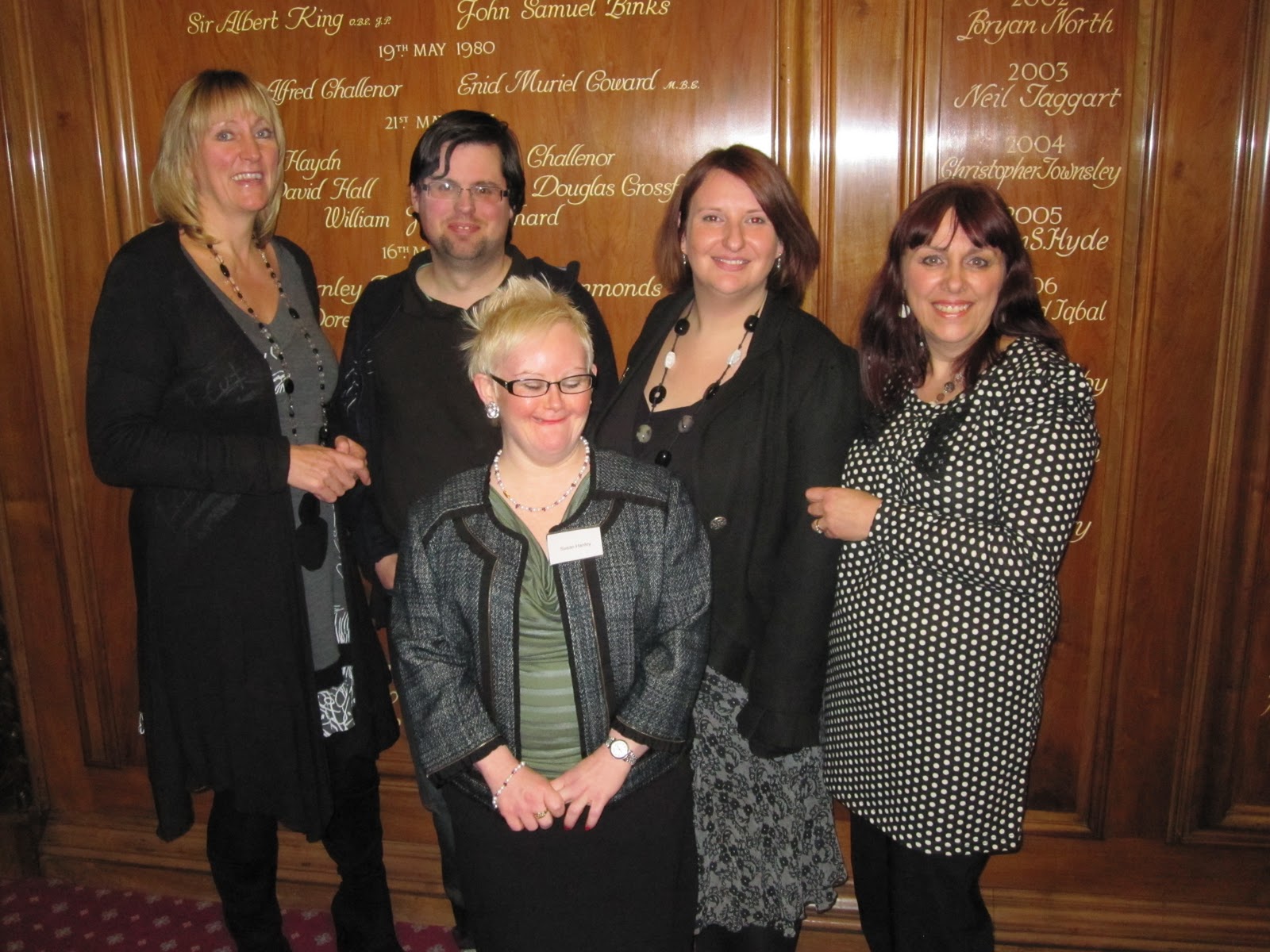
A successful event has taken place in Leeds where for the first time ever in Britain People with Learning Disabilities took over the running of a council chamber.

Attracted by the chance to discover how democracy works, and how to participate, the occasion attracted 50 people with a learning disability.

Organised by Leeds City Council, Mencap and the Leeds voluntary sector Learning Disabilities Forum it’s hoped that similar events will be now held across the country as part of a range of activities aimed at significantly boosting the numbers of people with learning disabilities voting at elections.

This follows a successful campaign organised during last year’s general election by Mencap that resulted in double the numbers of people with learning disabilities voting. This, though, still meant 2/3rds did not vote and following common law rules changes five years ago, which abolished the words ‘idiots and lunatics’, the aim is to see further increases in the future.

Given an opportunity to let representatives of the three major political parties know their concerns those present raised a diverse range of issues that included transport, housing, work and health. Computerised votes were taken showing that everyone wants the chance to use their free bus pass before 9.30am, a large majority want to see more work opportunities and many remain concerned about health care. There was a surprise though on housing with a split vote as to whether opportunities for people with learning disabilities need improving.

Further concerns about the impending cuts, opening times for day care centres in Leeds and the change of the Disabled Living Allowance in 2013 to a universal credit were all given an airing. As Paul Williams from the Mencap Through the Maze information services said to good applause; “we don’t get enough chances to say what concerns us, but when we do we have got plenty  to say.”

There were also lots of questions fired at the councillors. Surrounded on the panelled walls by the names of some of Leeds most famous political figures from the past, those present made their own little bit of history.

What do councillors do, how do you get to be one, why become one and how do people make contact with their local one? The answers, and the one from Councillor Lucinda Yeadon, Executive Board Member for Adult Health and Social Care, on why people with a learning disability should get involved in local politics to ensure that the diversity of Leeds population is reflected in debates at area committees and council meetings, were all warmly received.

With all but one person agreeing the event had been worthwhile Susan Hanley, co-chair of Leeds Learning Partnership Board, urged people to vote on May 5th in the local elections and said afterwards that she felt it had been “enjoyable and good in raising people’s knowledge and expectations. This hopefully will encourage them to become more active politically.” For those that want to then later this year, during National Learning Disability Awareness week in June, it’s planned to take a party of people with learning disabilities from Leeds to the Houses of Parliament.

In the meantime the electoral commission has asked for a report on the day’s events with Kath Lindley from the Learning Disabilities Forum expressing her desires to “see similar events held across the country.” 

The game I love is being killed by greed


With ticket prices at an all time high then you have to be either very well off or single, or better still both, to be a regular at the highest level of English football these days.

This is because whilst Sky TV has pumped millions into the coffers of Premiership clubs the ever expanding wages of professional footballers, which account for on average over 60% of a club’s expenditure, has inevitably led to increasing ticket prices.

This season it is over £40 for an away fan at Old Trafford and £47 or £49 at Chelsea - so if you’ve got a couple of kids then forget it. The result is that the next generation of supporters only get to see their favourites on the TV and I’d guess will continue doing so in the future, which isn’t going to worry the TV companies that much but could long-term lead to half empty stadiums.


As a keen football fan for generations I’ve seen many once loyal supporters stop going. Often the reasons are complex but there’s little doubt in my mind that a good number of them in recent times are sickened by the wages of the players who they see as caring very little about which club they’re playing for. Fans support a club, players support themselves is their view.

It’s not as if higher wages has led to a more competitive league - 34 years ago Nottingham Forest emerged from the second league to win the First Division title in their first season - that’s never going to happen again, and currently at least 75% of the Premiership flight sides have little chance of ever actually winning the thing. The best players end up with the best paying clubs, fact - some of them are happy to even sit on the bench and not actually play the game they supposedly love!

It mightn’t be so bad if the wages were encouraging more youngsters to take up the game - yet that doesn’t appear to be the case. As a kid growing up in the football mad north-east you’d find hundreds of us kicking a ball around every night. Dads would join in - not now, go and take a look round your own town and see if you can find a group of youngsters playing football?