It is 56 minutes long and went out on Tuesday 7 December 2021.
https://play.acast.com/s/achtung-radio/the-football-history-podcast-4-fred-spiksley?s=09
It followed an earlier podcast by myself on Charlie Hurley by Achtung Millwall.
It is 56 minutes long and went out on Tuesday 7 December 2021.
https://play.acast.com/s/achtung-radio/the-football-history-podcast-4-fred-spiksley?s=09
It followed an earlier podcast by myself on Charlie Hurley by Achtung Millwall.
Riding project helps teach vital life skills
Horses expensively trained to remain calm
A Bradford horse riding programme for disengaged school children has drawn praise from participants and their parents.
Changing Lives Through Horses (CL) is a national project
organised by the British Horse Society (BHS) that takes place with qualified coaches
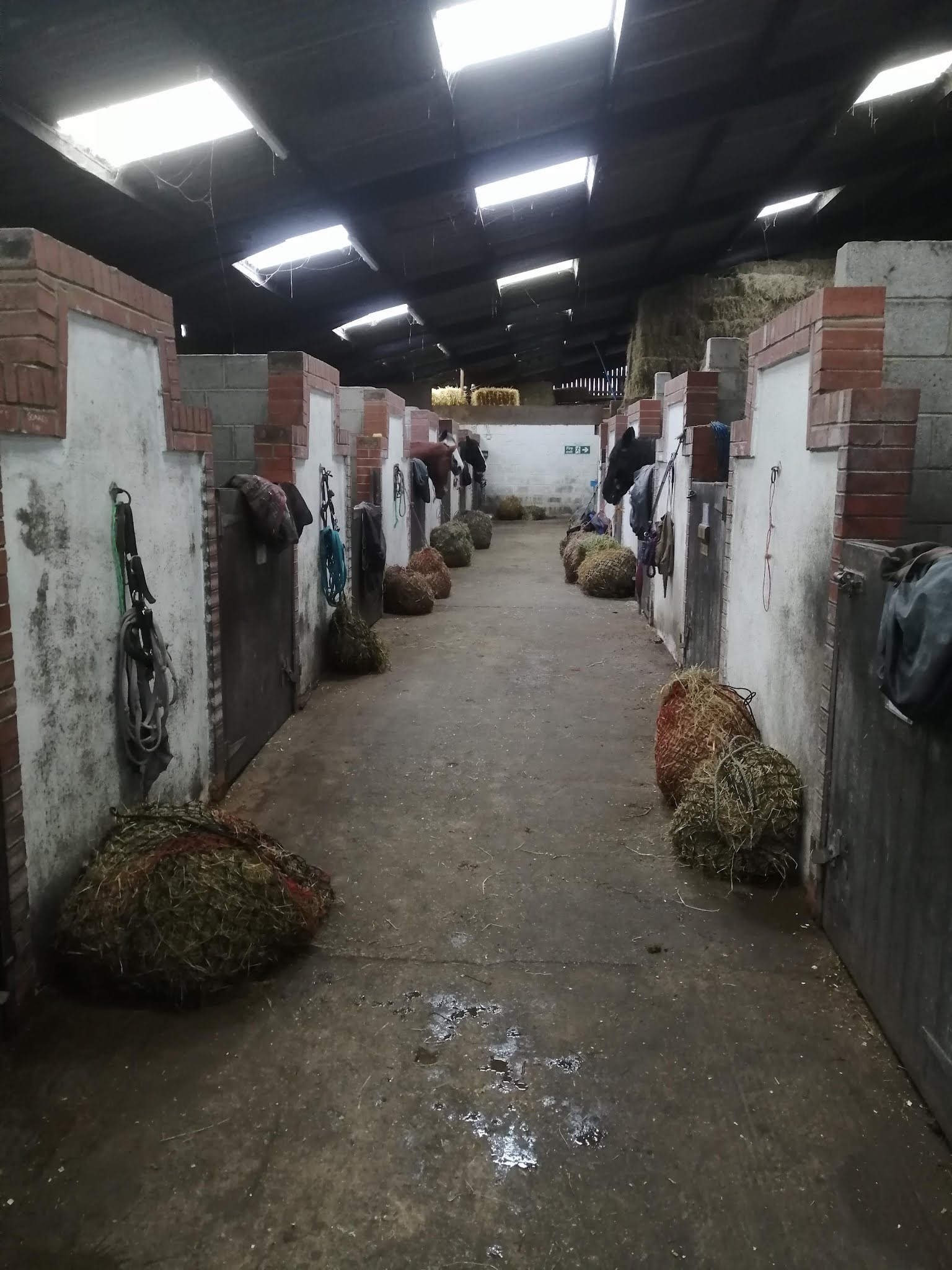
at approved riding centres including the Throstle Nest Riding school at Wilsden
Equestrian Centre.
 |
Opportunities extended
The BHS project is aimed at young people who are
“permanently excluded, at risk of permanent exclusion or who have special education
needs or disabilities”, those who are not in employment, education, or
training, or lack the skills to improve their economic situation.

Throstle Nest is run by Jeanette Wilder, who has been
working with horses since she was 12 when, along with her brother, she used
ponies from the family dairy farm to teach riding skills to children from the
Eccleshill area in Bradford. Wilder’s passion for horses has been extended into
providing opportunities for young people who are otherwise very unlikely to learn
to ride the animals.
“We put something back into the community. The Riding for
the Disabled Association (RDA) is linked to us. When the BHS established
Changing Lives four years ago, I immediately got us involved. Whilst it brings
in some income, we lose out by needing to turn away other customers,” said
Wilder
A general lesson at Wilsden costs £20 for 30 minutes and £25
for 45 minutes. On the Changing Lives programme the fees are £28 an hour and
£45 for two. The costs are covered by schools, the RDA, parents and charitable
associations.
Prodding and poking
Amelia Helm, aged 14, has been riding for ten years. She
persuaded her school to let her begin attending CL sessions in September.
“I am struggling speaking in school lessons,” she said.
“Coming here is relaxing. It is fun and I have no worries as I don’t need to
make an effort for people. “I do the lessons with other age groups and I relate
to them as we are all passionate about horses.”
She also attends weekend pony club lessons and enjoys mucking
out the stables and looking after the horses. She wants to do work experience
at the riding school next year as she is looking to work with horses when she
leaves education.
In addition to support from volunteers, Throstle Nest
employs eight full-time staff, all women
On site it has 21
horses, more expensive to buy in recent years. Horses must be four years old
and fullytrained before they can be used in the riding school and the animals,
which need to be calm and forgiving enough to be able to overcome some prodding
and poking, must be five before they can be employed on RDA sessions. To save
costs, Wilder bought a three-year-old horse, which staff are training. There is
no guarantee the horse will prove suitable for lessons.
There were nine children of varying abilities aged seven to
15 years on a Tuesday CL session in November. “We don’t tend to look at their
diagnosis but just work with them on a weekly basis as the children can be
totally different on each occasion,” said Wilder. “Sometimes they can be having
a bad day because of a change of medication. We have a plan but you can realise
it won’t work. You must be patient but we have a much lower ratio of staff
compared to pupils than at school and so we can make swift changes.”
Special relationship
Warren Keighley, aged six, who has complex needs, has been
attending the CL programme for two years.
“A physiotherapist identified that working with horses would
be very beneficial for building his core strength,” said his mum Hannah. “The
facilities here and the whole environment and dedication of staff, who are
empathetic with children that have different needs, means you feel included.”
Grandad Martin is also a big fan. “Warren has moved from
being afraid to get on a horse to saddling it up, mounting, leading and
dismounting from the animal,” he said.
During lockdown the centre trained parents and grandparents
in how to lead horses and this helped facilitate lessons for Warren.
Before lockdown,
Warren had built a special relationship with staff member Evie. On the day Big
Issue North visited, the pair had met for the first time in over a year.
A smiling Warren said: “What I liked about today is when I
saw Evie and I cried as I was happy. Missy was my horse today. She is a bit
cheeky like another horse called Dolly. I like coming here and being in charge
of a horse.”

According to Wilder the racing industry is offering
opportunities to young people to undertake apprenticeships in stable yards and
the pay thereafter is good.
Wilder explained that children attending the CL project are
taught to work with others and to pay attention and concentrate as otherwise
they get into trouble with the horse.
“It also improves their balance and by being fun it helps
develop an interest that we can channel into education generally,” she said.
“If they switch off at school in English and mathematics then we can get them
to write about horses and work out how much to feed the animals.”
In more basic scenarios, children get to recognise different
colours when they pick up objects when riding a horse.
The CL programme uses a range of awards that “are structured
around promoting the holistic development of all involved and nurturing six
life skills for all young people: building relationships, communication,
confidence, responsibility, teamwork and perseverance”.
Susan*, who has seen her two sons benefit from engaging with
horses said: “My eldest, who is hypermobile and has been diagnosed with
attention deficit hyperactivity disorder, has improved his core strength by
coming here.
“He has completed the award scheme development and
accreditation network qualification, which took him a year. He is not going to
achieve a standard qualification, so having a certificate where he can say
‘Look, I can do this’ is great for self-confidence.”
Susan’s youngest son
is nine. His CL programme is funded by his school and the RDA.
She said: “It has created a connection with horses, which
has helped him emotionally and his attention span has expanded. When riding he
must consider the needs of the horse and this moves him away from thinking
about himself and helps him to get on with other children.”
Susan believes that many more disengaged children would have
their lives improved if there were more opportunities to attend the project.
MARK METCALF * Name changed
SOIL
INCENTIVE PITFALLS
Farmers
to be paid for sustainable practices
Critics
say soil quality is difficult to measure
Article from Big Issue North magazine
Agricultural
experts who believe soil quality is critical for the UK’s food supply have
welcomed the government’s decision to pay farmers to improve it for the first
time. But concerns remain over how soil quality will be assessed and the
mechanism for paying farmers.
Following
Brexit, Britain is phasing out the European Union’s Common Agricultural Policy
farm subsidies and replacing them with the Sustainable Farming Incentive (SFI)
scheme, to be introduced next year.
According to
the Department for Environment, Food and Rural Affairs (Defra), the SFI is
“centred around incentivising sustainable farming practices alongside profitable
food production and rewarding farmers for producing public goods such as better
air and water quality, protecting wildlife and improving soil health”.
Compaction
and erosion
The plans
are part of the government’s 25-year Environment Plan, which includes a net
zero carbon ambition.
Soil quality
and biodiversity supports agricultural production and the storage of carbon.
But almost 4 million hectares of soil in England and Wales are at risk of
compaction, according to the Environment Agency, and 2 million hectares are at
risk of erosion.
Intensive
agriculture has caused arable soils to lose 40-60 per cent of their organic
carbon, said the Environment Agency in July. But it added that there is
insufficient data on soil health and called for investment in monitoring.
From next
year, farmers can sign up to SFI schemes to improve arable and horticultural
soils at payments between £30 and £59 per hectare and grassland soils at £6-£8
per hectare. According to a Defra spokesperson: “Healthy soil is key to
supporting our targets on the environment and improving farm profitability.
Well managed soils can lead to increased biodiversity, increased carbon
sequestration and storage, improved water quality and flood prevention.”
Food
scientist Charlie Clutterbuck, an academic and author who holds a PhD in soil
ecology, welcomed the government’s newfound commitment to monitoring soil
quality. But he said that should begin with “an England-wide measurement of
soil carbon”, investment in more research facilities and a legally binding
commitment to improving soil quality.
Clutterbuck
has calculated that Britain, which currently imports half its food, could
reduce this to around 25-30 per cent through better land management and soil
content. In turn, many countries that currently export to Britain could begin
to grow food for their own people, many of whom go hungry.
“We need
that better soil to produce more local produce to regenerate rural communities
and not fund carbon offset schemes that benefit the City,” added Clutterbuck.
Government
promises
SFI will be
phased in over seven years, while in the next three years farmers will lose
half their former EU subsidies. They mean more to smaller northern hill
farmers, earning around £25,000 annually, than larger farmers on the richer
plains in the south and east. Some farmers, many of whom have farmed for
generations, are being offered incentives to quit the land.
Critics say
this is at odds with Boris Johnson’s promise, made in 2016 at a cattle market
in Clitheroe, that farmers would get the same amount of money – “100%
guaranteed” – from subsidies after leaving the EU, while being relieved of red
tape.
The first
SFI schemes will start next spring but, according to environmental law expert
Richard Smith, “few farmers have signed up to the new programme”. Farmers’ have
low trust in Defra due to its previous management of agricultural subsidies.
A Defra
spokesperson said it was planning a “comprehensive programme of soil monitoring
across farms participating in the early roll-out. The first stage will be
establishing a baseline for a range of soil health indicators.”
The
spokesperson added: “There is a wealth of expertise in soil health within the
UK including scientists from the University of Lancaster and UK Centre for
Ecology & Hydrology.”
MARK METCALF
4 podcasts by John Smith, born 1932, a Great Yarmouth Docker
who died on 23 September 2021.
1)
The Life of a Great Yarmouth Docker
https://open.spotify.com/episode/2Jgsu60FKfEPX3BVRgZTtw
2)
From docker to branch secretary
https://open.spotify.com/episode/5fOsjcxafCOlouLXYVMtNn
3)
https://open.spotify.com/episode/7C1P6IQ7xaAg6YL5TLOAji
John Smith (RIP) – Stopping the
Job – there is power in the union.
4)
https://open.spotify.com/episode/2iL65MLvTtIHlvv6p2bsx3
The decline of the docks following the ending of the
National Dock Labour Scheme
Could it happen again?
In 1842 Britain was a society where parliament sent troops
against civilians. But parliament
understood the implications of this terrible state of affairs and from then on
has largely sought – with the exception of Ireland and which I will return to
in due course - to control protests using the police, a civil force with
coercive powers – which many people opposed - that began under Sir John Peel’s
Metropolitan Police Act 1829 and which resulted in a network of police forces
over the following quarter-century with the Lighting and Watching Act 1833, the
Municipal Corporations Act 1835 – which enabled the first local authorities to
set up borough forces, the County Police Act 1839 allowed the provincial
counties to do the same, the City of London Act 1839 similar, The Town Police
Clauses Act 1847 clarified police powers and in 1856 the County and Borough
Police Act required all local councils to establish forces.
The police had, of course, demonstrated by 1833 that it was
capable of spying on political activists and acting brutally as was the case at
the Cold Bath Fields Meeting, declared illegal by the Home Secretary Lord
Melbourne, of the National Political Union of the Working Classes.
Since then, any regular protestor will tell you that they
expect the police to misbehave on protests, that in fact there has always been
a shared understanding between police and protestors that the police will
resort to unlawful violence at political protests.
Even the Countryside Alliance supporters in 2001 found
themselves being roughed up outside Parliament when they protested against Tony
Blair’s plans, forced on him due to popular pressure, to outlaw fox hunting
with hounds. The attacks on women who
attended the vigil earlier this year for Sarah Everard, murdered by the police,
came as no surprise to many people.
Returning to the past, on Sunday 13 November 1887, the Met
deployed military tactics to prevent a demonstration in support of Home Rule in
Trafalgar Square on what became known as Bloody Sunday. 2000 police officers,
backed up by troops and cavalry prevented a quarter of a million people
protesting and 200 afterwards required hospital treatment. Later many members
of the public sought to bring charges of assault against 34 officers.
At the start of the 20th century – November 1910
- the police acted violently and also indecently assaulted numerous members of
the Women’s Social and Political Union whose actions included disorder and violence when seeking to breach
police lines to gain entry to the House of Commons In total 296 women were
arrested. All but 52 defendants later had their charges dropped. The Home
Secretary Sir Winston Churchill later refused to hold a public inquiry into
events.
Of course, the military were still during this period used
where necessary. The Featherstone Massacre of 1893 during the national lock out
of miners:-
Here is the Guardian report, dripping with support for the
military. It was about nine o'clock on
Thursday night when the South Staffordshire detachment first fired on the mobs
which were besieging the colliery of Lord Masham and were charging the soldiers
with stones. The first shot was only by one file of two men, and these did not
take effect. Shortly before ten o'clock one section of the Staffordshires fired
two volleys.
So far as could be ascertained seven of the mob were hit.
James Gibbs, of Loscoe, was shot through the breast, and expired. James
Perkins, knee shot away, died yesterday.
A sculpture was unveiled at Featherstone in 1993 marking the
centenary of "the Featherstone massacre", in which it says two miners
died.
Then, of course, there was Tonypandy in 1910 where another
joint police, involving local forces and the Met, and the army attacked
striking miners resulting in the death of Samuel Rhys, who it is believed was
hit by a police truncheon.
In August 1911, troops of the Worcestershire regiment shot
dead two striking railway workers in Llanelli where strikers, taking part in
national action, had already been brutally attacked by the police.
February 1919 – the police and military were jointly used to
suppress a strike in Glasgow for 40 hour working week.
In none of these cases did any police officer or member of
the military find themselves arrested or imprisoned.
In 1926 the army were used to break the strike by
undertaking roles vacated by strikers.
Joseph Foster, interviewed in April 2005, recalled events in
Burnhope in 1926 , when he was 14, as “being a terrible time. I saw the worst
of the strike. No clothes, no shoes, no food... families couldn’t make ends
meet.
Foster remembered an incident in which a delivery van was
tipped over by four striking miners, Ted Close, Harry Hobbs, Jim Hobbs and
Frankie Armstrong who had all been left angry after they had been forced to
dive out of the way when the van was earlier driven at them. The events led to
soldiers being sent to Burnhope. “They were walking about with bayonets, with
guns.”
There is, of course, a place little more than 100 miles from
here where British Troops have regularly been employed to put down
demonstrators marching for rights that most people would accept be granted. On
30 January 1972 the largest civil rights (organised by NICRA) march in the history
of Northern Ireland was ruthlessly suppressed with 14 killed, none of whom were
armed
Later, Lord Saville's report was made public in 2010
and concluded that the killings were "unjustified" and
"unjustifiable". It found that all of those shot were unarmed, that
none were posing a serious threat, that no bombs were thrown and that soldiers
"knowingly put forward false accounts" to justify their firing. The
soldiers denied shooting the named victims but also denied shooting anyone by
mistake. On publication of the report, British Prime Minister David Cameron made a formal apology on behalf of the
United Kingdom. Following this, police began a murder investigation into the
killings. One former soldier was charged with murder, but the case was dropped
two years later when evidence was deemed inadmissible. This is now subject to
appeal.
Bloody Sunday fuelled Catholic and Irish
nationalist hostility towards the British Army and worsened the
conflict. Support for the Provisional Irish Republican Army (IRA)
rose, and there was a surge of recruitment into the organisation, especially
locally.
Nearer to the current day, what are we to make of the fact
that during Jeremy Corbyn’s time as leader of the Labour Party we witnessed soldiers
filmed using a Jeremy Corbyn poster for target practice.
The video showed servicemen from the Colchester-based
Parachute Regiment in a shooting range, believed to be in Kabul, Afghanistan.
The soldiers were disciplined but not sacked.
No
Pasaran - James Alwyn of Bolton when to Spain to fight for democracy and lay down his life in doing so
Edward
McHugh - rediscovering a lost -working-class hero
Ellen
Strange - the light that still burns


