Thursday, 17 February 2011

Caroline Lucas interview


Global warming means redistribution not revolution would be the order of the day under a Green Party government. So says its leader and only MP Caroline Lucas, who is prepared to leave the main base of capitalism and ownership intact to concentrate on increasing renewable energy sources and cutting CO2 emissions. Tasks she feels are crucial to the earth’s future and those living on it.

Willing to work with members of all parties who share a vision of progressive policies Lucas believes Labour will need to change dramatically to be seen as progressive and expects the Lib Dem’s falling electoral support to ensure the coalition government lasts its full five year term in office. By then she hopes the Greens, in 2014, will have knocked Nick Griffin from his perch as a Member of the European Parliament [MEP] in the north west, the Green Party having come just 5,000 votes short of beating the BNP leader at the 2009 elections, by which time Lucas was set on becoming an MP after a decade as an MEP. 

Nine months in then does he feel she’s achieved anything as MP, especially as she’s the only Green at Westminster? “Like all opposition MPs I can’t write laws, but I can raise issues that cannot aired elsewhere. That means highlighting the effect of coalition cuts upon the communities in my constituency. It means bringing distinctive positions - for example on the Afghanistan debate last year my amendment was the only one that proposed withdrawal. And it means bringing more attention to the need to tackle the climate crisis with action that can improve the quality of life for all of us, such as better, more affordable public transport, better insulated homes, the end of fuel poverty, stronger local communities and economies, and many more jobs.

Locally, campaigning has helped persuade Tesco not to develop over a community garden in Brighton and I managed to arrange a meeting with third sector groups and a Cabinet Office minister. At this campaigners argued the Big Society rhetoric needs to be backed up with proper spending. There have also been some successes in weekly surgeries, following up everything from housing problems to visa applications” said Lucas with a modest smile.

She welcomed the election of Ed Milliband as Labour leader. She certainly hopes he will be better than the previous two; especially Tony Blair who she believes should be indicted for war crimes for his actions in Iraq. She was left t dismayed by the ex-Prime Minister using the launch of this autobiography to suggest Iran should be next on the list of countries to be invaded by the USA and, almost certainly, Britain.

Milliband has distanced himself from Blair and Brown’s Iraq adventures but it will take more than that to convince Caroline Lucas that Labour is progressive. “Labour increased inequality, carbon emissions rose and Ed himself favoured new nuclear and clean coal projects, spending that could have gone on energy efficiency and renewables. Labour’s ability to challenge coalition policies on everything from academies to increasing NHS privatisation is fatally undermined by the fact the party spent 13 years paving the way for the coalition’s assault on public services.”

It’s an assault she stands willing to oppose. She expects it might be a long fight because “their low poll ratings mean the Liberal-Democrats must hang on in government in the hope that by 2015 the cuts have somehow led to an economic revival.”

She expects to see strikes, but hopes they are the last resort and wants to see users of public services at the forefront of any campaign to defend care homes, libraries and the NHS. The Greens were the only party to fight the election on the basis that the budget shortfall could be overcome by reforming the taxation system. Lucas describes as “ridiculous a situation where the top 10% of income earners pay less in % terms than the bottom 10%. We want to use tax to reduce inequality, and propose raising taxation from 36% of Gross Domestic Product this year to 45% by 2013.  Part of this can be done by ensuring HM Revenue and Customs are given the resources to tackle tax avoidance and evasion to ensure the rich pay their fare share.”

Lucas though expects the rich and well to do to be around for sometime yet. She’s unconvinced by socialist arguments that only after a complete transformation of society can global warming be tackled. Profit is certainly not a dirty word. True she hopes to see many more workers co-operatives in the near future but she’d also “like to see significant resources in a Green Investment Bank to assist major companies exploit opportunities on, amongst others, renewable energy sources and a massive programme of housing insulation.

This is because I genuinely believe scientists when they say the next 5 to 10 years are going to be so important to tackling climate change. Carbon emissions must be brought down to prevent the earth continuing to warm up as otherwise we face a catastrophe. We need to cut it now, and that means working with what we’ve got as well as working towards something a lot more equal in the future.” 

As part of this she hopes to see more Green’s on councils and in Parliament. In the North the party currently has only a handful of northern councillors - in Huddersfield, Liverpool, Leeds, Bradford and Sheffield. Yet it didn’t stop it almost winning a seat in the 2009 northwest European elections. Capturing 127,000 votes was impressive, but the BNP did better and with 132,000 took the eighth seat under the proportional representation system employed in the elections. The Greens had managed to persuade George Galloway’s Respect party not to stand, but Bob Crow’s NO2EU and the Socialist Party proved more intractable and their 50,000 votes might have been more usefully employed in defeating Nick Griffin.

Caroline Lucas hopes those opposed to the fascists won’t make the same mistake in 2014 by standing against each other. Whilst you suspect she may be a little optimistic on this, and many of the other things she hopes to achieve, you do detect behind the smiles and endearing charm a determination to get things done for the benefit of all. Which isn’t something you feel about most mainstream politicians. 

Quick Reads Day on March 3rd 2011

The sixth Quick Reads Day is on March 3rd this year, it's a great idea to get people reading. Last year i enjoyed reading the following:- 

Traitors of the Tower by Alison Weir

Power corrupts and never more so than during the middle ages when to fall out of favour at the highest levels could be the death of you. And it certainly was for seven of the most noble in the land, who between 1483 and 1601 were beheaded in the Tower of London after being found guilty of treason. Three had been queens of England, others had been loyal subjects and the evidence against some wasn’t too hot. It’s complex, but it all makes for fascinating reading and Alison Weir, who has previously been criticised for her populist style of trying to make history open to all, does a great job in capturing the truth behind these dramatic, gory events.

The book by Alison Weir, whose previous best-selling books include The Six Wives of Henry VIII was amongst 10 from UK authors published on March 4th 2010 in the annual Quick Reads series that provides quick shots of entertainment for all tastes, from fiction and crime to real-life stories.

Described by ex-Prime Minister Gordon Brown as, ‘one of the great success stories of the English language’ Quick Reads are aimed at people looking for an introduction or return to reading as well as regular readers.  Hundreds of thousands of new readers are believed to have been amongst the one and a half million bought copies in the first five years. A survey conducted in 2009 amongst tutors working with 30,000 adult learners in workplaces found that 82% were likely to read another book. Heart warming news all round, and one in which the trade union movement through Unionlearn has played its part, from the very start, as a partner alongside leading authors, publishers, government bodies and the BBC.

Alison Weir was only fourteen when, marched into a library by her mother to ‘find a book to read’, she became passionately interested in history. It wasn’t however until she was in her fifties that she had her first book Britain’s Royal Families published. Dozens have followed since and she has a large loyal readership. Nevertheless she is aware of how difficult some people find it to read after her son was born with special needs.

“I care passionately about people becoming literate and any projects that can help people do so can expect my support. In this book I am attempting to bring history alive to those who might be interested in it from watching films or television dramas or documentaries or from visiting the Tower of London. People from all ages are fascinating and none more so than the seven who lost there live as traitors.

I really like the cover of the book, which shows a young girl, Lady Jane Grey, blindfolded and kneeling before the block on which she was executed after just nine days in the role of queen that she never wanted.

For details on this year's books go to quickreads.org.uk/

Statue outside British Library

Wednesday, 9 February 2011

Who owns Britain?


It is a fact that although there are land registries covering Scotland, both parts of Ireland, England and Wales, costing the taxpayer annually over £200 million to operate, they cannot tell you how much land is held by the largest landowners. This is because only land that has been bought and sold since 1925 has had to be registered.

When author Kevin Cahill had his first book ‘WHO OWNS BRITAIN – the hidden facts behind landownership in the UK and Ireland’ published in 2001 he estimated that between 30% and 50% of the acreage of England and Wales was unregistered.

Since then the Land Registry has introduced a voluntary registration scheme and this “has increased the number of landowners who have registered their land. For example Gerald Cavendish Grosvenor, the sixth Duke of Westminster has been talked into co-operating and his whole estate of close to 130,000 acres has now been registered. However in the south west very few major landowners have bothered to register – there’s no reason for landowners to register, there’s no incentive” says Cahill. 

Grosvenor like most of the large landowners in Britain can trace their family history back many generations. In the Burke’s Peerage of 1896 it states ‘the founder of the English Grosvenors Gilbert Le Grosvenour came over in the train of William the Conqueror in 1066” and following the victory at the Battle of Hastings was rewarded with estates in Cheshire and the Earldom of Chester.

Five hundred years later Henry the VIII persuaded the country to give up Catholicism by dissolving the monasteries and distributing the 10 million acres of land to just 1,500 families.  The final ‘capture’ of land rights from ordinary people came during the Industrial Revolution and the various ‘Acts of Enclosure” in which common lands that could be grazed were enclosed. Poverty and starvation removed people from the land and forced them into the factories of the Industrial revolution.

Millions also emigrated to places such as Canada and Australia, where if they could find the money they could buy some land and erect a house to live in. It may thus come as a shock to any of their relatives still living on this land that they don’t own it!

Kevin Cahill says “that’s not my claim, I merely repeat what the government states in the notes on the Parliamentary website relating to the Registration of Land Act 2002: ‘The Crown is the only absolute owner of land in England and Wales, all others held in land in one of two forms of [medieval] tenure, leasehold and freehold [is fee simple’] This is also the case in Australia, Canada and many other places. Freeholders do not own ‘their land’ – fee simple is a medieval term for the sum paid to represent the fact that freehold was actually a tenancy. I would like people to own their own property with no secondary owner hidden in the woodwork”.


Nine years ago Cahill’s book, compiled after almost a lifetime of research, lifted the lid on who owned Britain. It revealed that approximately 189,000 people own 88% of the land, with over 25 million acres of land in England and Wales occupied by just over 150,000 individuals or families. This translates into roughly 0.28% of the population owning 2/3rds of the land.


These are staggering statistics. Yet they have hardly merited a mention in the newspapers, or on radio and TV. And when the BBC did see fit to run a programme based on Cahill’s work it hardly acknowledged him. Consequently the nation’s favourite channel has now been banned from serialising Cahill’s follow-up ‘Who Owns the World’, despite approaches to him by BBC Executives.

No major political party has also seen fit to use them – Cahill has always believed that it won’t be until Labour is in opposition that they will realise “they’ve missed an opportunity”. It was Labour, of course under the then leadership of Tony Blair that took the ‘revolutionary step’ of excluding hereditary peers from the House of Lords, many of whom were from established large land owning families.

Meanwhile large landowners are also the beneficiaries of massive subsidies through the European Union’s €55 billion CAP programme.  Until the last few years exactly how much each gets was unknown as the Department for Environment, Food and Rural Affairs didn’t release such figures in a way that was easily understandable.

Thanks however to the efforts of http://farmsubsidy.org/GB all this has changed in recent years, and in 2008 it’s known that €3755 million was distributed to landowners and farmers in Britain. Of which exactly half went direct to the top 10% of recipients with the average direct aid per hectare [2.4 acres] of land being €224.

“The subsidy is enabling land owners to keep land off the market for doing nothing. We have 5 million acres for example that is set aside” says Cahill who sees the European Union as little more than an ‘outdoor relief organisation for Europe’s redundant aristocracy’.

Cahill believes “with less land builders have to pay more for that which is available. A few years back around 70% of the cost of a house was for the land, when in reality it should have been about 20%. In Devon where I live a lot of village houses were sold to second home owners and nobody was building new homes so the supply dried up and with nobody releasing land then people, including agricultural workers, are being squeezed from two sides.”

 ‘WHO OWNS BRITAIN – the hidden facts behind landownership in the UK and Ireland’

Mainstream Publishing published ‘WHO OWNS THE WORLD – the hidden facts behind land ownership’ in 2007. 


Councillors for a day

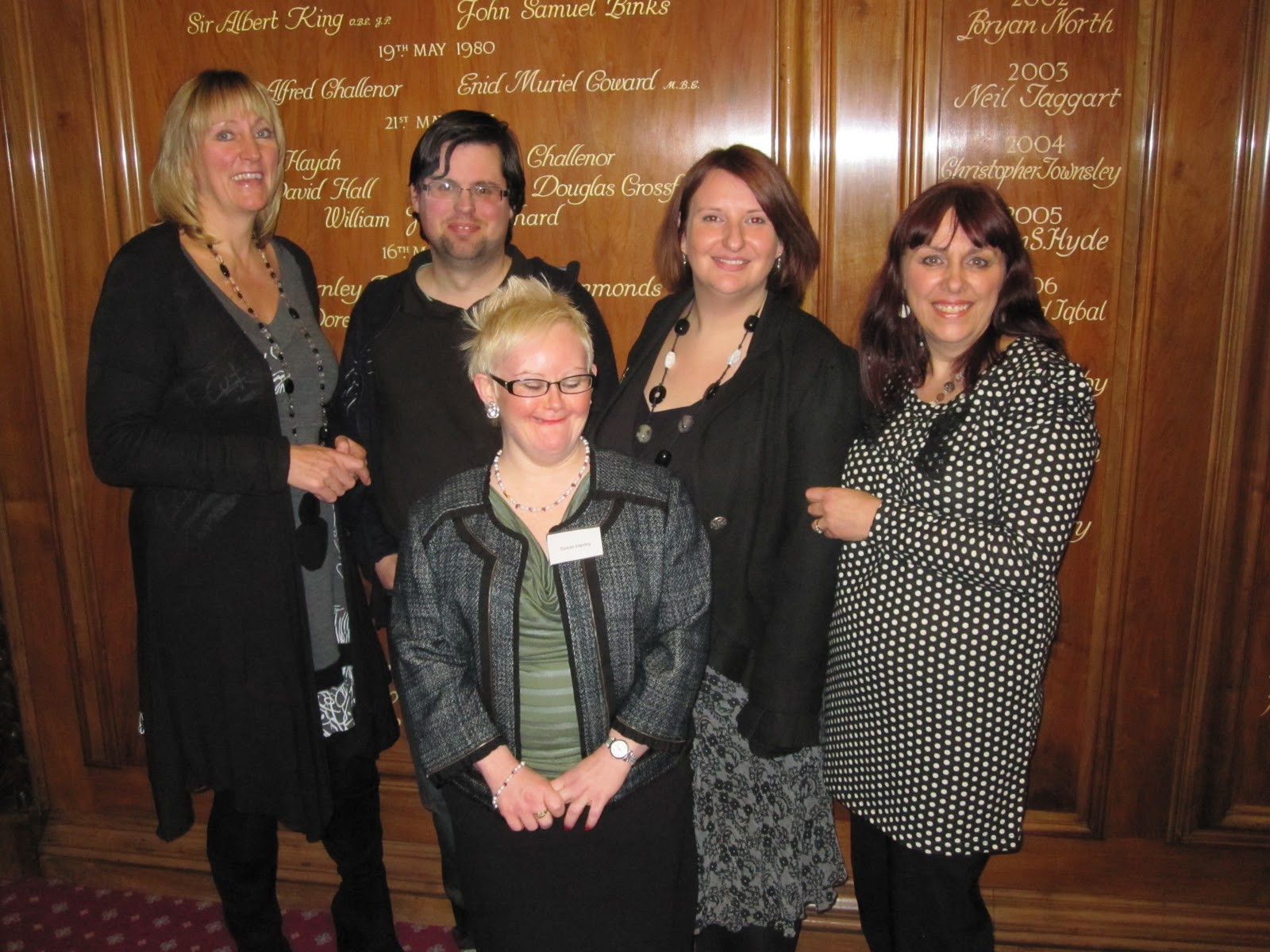
A successful event has taken place in Leeds where for the first time ever in Britain People with Learning Disabilities took over the running of a council chamber.

Attracted by the chance to discover how democracy works, and how to participate, the occasion attracted 50 people with a learning disability.

Organised by Leeds City Council, Mencap and the Leeds voluntary sector Learning Disabilities Forum it’s hoped that similar events will be now held across the country as part of a range of activities aimed at significantly boosting the numbers of people with learning disabilities voting at elections.

This follows a successful campaign organised during last year’s general election by Mencap that resulted in double the numbers of people with learning disabilities voting. This, though, still meant 2/3rds did not vote and following common law rules changes five years ago, which abolished the words ‘idiots and lunatics’, the aim is to see further increases in the future.

Given an opportunity to let representatives of the three major political parties know their concerns those present raised a diverse range of issues that included transport, housing, work and health. Computerised votes were taken showing that everyone wants the chance to use their free bus pass before 9.30am, a large majority want to see more work opportunities and many remain concerned about health care. There was a surprise though on housing with a split vote as to whether opportunities for people with learning disabilities need improving.

Further concerns about the impending cuts, opening times for day care centres in Leeds and the change of the Disabled Living Allowance in 2013 to a universal credit were all given an airing. As Paul Williams from the Mencap Through the Maze information services said to good applause; “we don’t get enough chances to say what concerns us, but when we do we have got plenty  to say.”

There were also lots of questions fired at the councillors. Surrounded on the panelled walls by the names of some of Leeds most famous political figures from the past, those present made their own little bit of history.

What do councillors do, how do you get to be one, why become one and how do people make contact with their local one? The answers, and the one from Councillor Lucinda Yeadon, Executive Board Member for Adult Health and Social Care, on why people with a learning disability should get involved in local politics to ensure that the diversity of Leeds population is reflected in debates at area committees and council meetings, were all warmly received.

With all but one person agreeing the event had been worthwhile Susan Hanley, co-chair of Leeds Learning Partnership Board, urged people to vote on May 5th in the local elections and said afterwards that she felt it had been “enjoyable and good in raising people’s knowledge and expectations. This hopefully will encourage them to become more active politically.” For those that want to then later this year, during National Learning Disability Awareness week in June, it’s planned to take a party of people with learning disabilities from Leeds to the Houses of Parliament.

In the meantime the electoral commission has asked for a report on the day’s events with Kath Lindley from the Learning Disabilities Forum expressing her desires to “see similar events held across the country.” 

The game I love is being killed by greed


With ticket prices at an all time high then you have to be either very well off or single, or better still both, to be a regular at the highest level of English football these days.

This is because whilst Sky TV has pumped millions into the coffers of Premiership clubs the ever expanding wages of professional footballers, which account for on average over 60% of a club’s expenditure, has inevitably led to increasing ticket prices.

This season it is over £40 for an away fan at Old Trafford and £47 or £49 at Chelsea - so if you’ve got a couple of kids then forget it. The result is that the next generation of supporters only get to see their favourites on the TV and I’d guess will continue doing so in the future, which isn’t going to worry the TV companies that much but could long-term lead to half empty stadiums.


As a keen football fan for generations I’ve seen many once loyal supporters stop going. Often the reasons are complex but there’s little doubt in my mind that a good number of them in recent times are sickened by the wages of the players who they see as caring very little about which club they’re playing for. Fans support a club, players support themselves is their view.

It’s not as if higher wages has led to a more competitive league - 34 years ago Nottingham Forest emerged from the second league to win the First Division title in their first season - that’s never going to happen again, and currently at least 75% of the Premiership flight sides have little chance of ever actually winning the thing. The best players end up with the best paying clubs, fact - some of them are happy to even sit on the bench and not actually play the game they supposedly love!

It mightn’t be so bad if the wages were encouraging more youngsters to take up the game - yet that doesn’t appear to be the case. As a kid growing up in the football mad north-east you’d find hundreds of us kicking a ball around every night. Dads would join in - not now, go and take a look round your own town and see if you can find a group of youngsters playing football?

The 128th Durham Miners’ Gala - Saturday July 9th 2011

“It’s infectious, and I’d bet any trade union member attending for the first time will want to return to the Durham Miners’ Gala,” said plumber Pat McCourt, chair of the Unite Yorkshire and Humberside regional committee.
Sometimes called ‘Durham Big Meeting’ the Gala was first held in 1871 and last year’s, on Saturday July 10th, brought over 100,000 on to the windy cobbled streets of the historic Cathedral city of Durham.
Ed Malcolm was a miner until the Tories closed Westoe Colliery, where he worked for more than 20 years. Today he is employed as an advice worker at Middlesbrough Citizens Advice Bureau. He said: “It’s always marvellous to see so many people. I’d describe the gala as a carnival of working class solidarity and community spirit. Which is why it was important to keep it going, by inviting other unions to get involved, after the mines were closed in the 80s and 90s.
The closures were major acts of industrial sabotage. We had the cheapest coal in the industrialised world, but the Margaret Thatcher and John Major Government’s wanted to destroy the post-war social-democratic consensus. To do so they needed to cripple the National Union of Mineworkers as an example to other trade unionists. Coal from places where workers were little more than slaves, such as South Africa and Columbia, replaced British coal in the electricity generating stations.
They also made sure research efforts to develop clean coal technology and carbon capture were starved of funds. I was on strike for a year in 1984 but eventually we were virtually starved back to work and the pits were closed. But if the Tories hoped to extinguish people’s spirits the turn out at the gala shows they’ve failed.”
John Chilton, the Unite Convenor at Cleveland Potash Limited near Whitby agrees saying; “as one of the UK’s few remaining miners I find the Gala to be an uplifting event and each year we are finding more members are wanting to get involved. Our aim is to have a new banner made in time for this year’s and we will march proudly behind it.” 
Which is exactly what Unite finance sector members were doing last year, their new banner having its first outing. One of those accompanying it was Ruth Creaney, senior workplace rep for Barclays across the north of the UK, who said she was “fully behind keeping alive this traditional trade union event that is built on the values of collective organising and solidarity. It’s also a very colourful spectacle and it’s great to see the dozens of Miners’ banners from across Northumberland, Durham and Yorkshire being paraded and listen to the accompanying brass bands.”


According to Pat McCourt: “The banners are one of the real highlights of the Gala. Each miner’s lodge/branch had or has one and the decision as to what to include on it is very important. At Dean and Chapter in Ferryhill, my father’s workplace for many years, the banner shows two white and one black miner. This represents the internationalism of the trade union movement. Other banners depict important political figures such as A J Cook the mineworker’s leader in the 1926 General Strike. They make an impressive sight, including the new ones.”
In 2010 there were two new banners, from Eldon Drift and Usworth, on display. Costing as much as £15,000 their design and creation is a community effort in which children play a prominent part.
“They are the future of the region, but it’s important they have some understanding of the past and the banners are a creative way of interesting the children in local history. It seems to work as each year more children and young people are getting involved in the banner projects, often working alongside their parents and grandparents” says Ed proudly.


Other youngsters are also getting involved in the Gala through the brass bands that accompany the marchers behind the banners. The bands have always been an important part of cultural life in mining communities. Today they continue to provide opportunities for cash strapped working class young people to learn how to play a musical instrument they could never afford to purchase themselves.
According to Paul Meszaros, who works for Hope Not Hate in Yorkshire, the combination of marchers, banners and brass bands is “a powerful one especially when each Miner’s lodge halts to play a popular tune and receive a salute from the VIPs on the balcony of the Royal County Hotel. They then proceed down to the Racecourse ground next to the River Wear where there were stalls, fairground attractions and a chance to have a picnic with friends and family before the speeches started after lunch.”


Last years speakers included Ken Livingstone, Jeremy Corbyn MP, Chris Baugh, PCS Assistant General Secretary, Adla Khalaf, an advisor on water issues to Palestinian negotiators and Unite assistant general secretary Len McCluskey, who said that in light of the attacks to be faced by working people from the new Government “the community spirit and solidarity on display was going to be needed more than ever in the future.”
In the past speakers have included Labour Leader Clement Attlee, Mrs Bessie Braddock MP, Harold Wilson, Arthur Scargill, Bob Crow and Dennis Skinner. Skinner, a regular at the Gala, is a big fan of the day saying: “I think people leave the Gala feeling better. It is the kind of place where they get lifted in good times and in bad.”  

Q&A with Dave Douglass, author of Ghost Dancers on the 84-85 Miners' strike

Ghost Dancers - David John Douglass               
Christie Books
£12.99
Retired coal-miner and political activist Dave Douglass takes an insiders look at the 84-85 coal strike, and its aftermath, in which he played a prominent role including help co-ordinate many Yorkshire pickets.  

Strange title?

Anyone who has read the history of the Native American peoples (the red Indians) should understand. What happens with the Indians is not simply a war to defeat them but to wipe out all memory of who they were, their history and beliefs. The Ghost Dancers started as a spiritual endeavour to hold on to their free will, spirit and identity.

Something similar in cultural terms has happened to the mining communities. The government came from 1981 to 1994 to defeat us in industrial action. They took away the source of our social and economic existence by rigging the energy market and closing down virtually every coal mine in Britian. Then they tried to break our spirit and the memory of who we were. Our ‘Ghost Dance’ is witnessed in the annual Durham miner’s gala, 90,000 people, with their bands and banners and speeches of hope and vision marched last year - yet the last mine closed in 1994.

Why do you claim that ‘the miner’s almost won?’

The book will explain three clear occasions when we came to within a wisp of winning, and Prime Minister Margaret Thatcher was ready to concede the lot. Ian McGregor, the coal board chairman, actually conceded four or five times but had the script changed by Thatcher each time. 

The closest was with the decision of NACODS, our brother mining union for colliery officials, to join the strike. However their leaders cobbled together an utterly ineffective deal, which never saved one mine, and left us on our own. From then on, we were fighting to the death without any real prospect of winning.

Christie Books say this is the definitive history of the strike - why?

Because all the books by academics and journalists have been painfully inaccurate or wildly speculative. Most of them have not a clue how the strike started, nor how the Union and this action was structured, nor who planned what on either side.

Doesn’t the book give credence to those who argued the miners were violent?

Three miners were killed and one disabled for the rest of his life, two children died on picking coal to keep warm and 20,000 miners were hospitalised. One driver taking a solitary blackleg to work in a strike bound Welsh village was killed. Miners are men used to fighting the earth. They exude dignity and self respect, but when threatened they will fight, and that fight did get violent. All of this is explained in context without pulling any punches (no pun intended). It will also demonstrate something like 110,000 strikers miners NEVER picketed.  This will be a revelation to many.  

On what basis do you claim that Thatcher wasn’t interested in the economic case for coal?

Because the book demonstrates that Britain produced the cheapest deep-mined coal in the world. Instead of which we now import almost 50 million tonnes of coal, whilst leaving our own in the ground and putting miners on the dole in communities now wrecked by poverty, hopelessness, and anti social crime. Altogether the cost is nudging £30 billion. David Cameron has the brass neck to speak of ‘A broken Britian’ when his party and its junior partner New Labour was the one to break it.

By making the case for increased coal production aren’t you on ‘the wrong side’ in the climate change battle?

Coal production doubled in the last twenty years and it will almost double again in the next ten. Fact - coal will be burned. We must ensure that we urgently develop clean coal technology and carbon capture storage as well as workable alternatives, like solar and tidal power. But we should also treat coal as a precious power source and greatly increase the efficiency of its use. I don’t trust many of the middle class ‘green’ anti coal protesters, it’s really just Thatcher’s children and grandchildren still waging war on the miners and those dirty workers.